How did they manage to turn Google into a verb? Here’s a clue:
A longish (10 – 15 minute read), eerily fascinating fragment from Julian Assange’s new book, When Google Met Wikileaks. In this excerpt Assange documents his bizarre encounter with Eric Schmidt, CEO of Google, one of the most powerful managers of information – our information – on the planet.
Eric Schmidt, Google CEO. Photo: Business Insider.
From the excerpt:
“I began to think of Schmidt as a brilliant but politically hapless Californian tech billionaire who had been exploited by the very U.S. foreign-policy types he had collected to act as translators between himself and official Washington.
“I was wrong.”
How wrong Julian Assange was, and how tightly enmeshed Google is in the US national security apparatus, he documents in meticulous, chilling detail. Here. Or here.
But all is not lost. There are alternatives to Googlism, created by people who value freedom – the real thing, not the flags-and-guns kind – over profit and power.
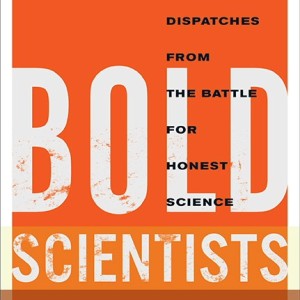
For deeper insight into the global shroud of state/corporate surveillance that’s tightening over us even as it seduces us into complicity, meet David Lyon, a world authority on surveillance and population control, in The Cloud, chapter 6 in Bold Scientists, here. (Scroll down to The Cloud.)
“A recent New York Times editorial, referencing the rapid development of the Alberta oil sands, went so far as to describe new communications restrictions on government scientists as ‘an attempt to guarantee public ignorance.’” – from an open letter to the current Canadian government, signed by more than 800 scientists from 32 countries.
Image: Steve Nease, The Toronto Star
The international roster of scientists called on the Harper government to end “burdensome restrictions on scientific communication and collaboration faced by Canadian government scientists.” More detail on the story here.
The call was made in an open letter drafted by the Cambridge, Mass.-based Union of Concerned Scientists. UCS represents U.S. scientists, and fosters “rigorous science to build a healthier planet and a safer world.”
The need for this unusual intervention is strongly reinforced in a new report from the Canadian organization Evidence for Democracy. It assesses the communication and media policies of 16 Canadian federal government departments.
For more on the fight for open science and democracy, see chapters 9 and 12 in Bold Scientists. Read an excerpt here.
Tar sands oil is a cumulative disaster at every stage: extraction, processing, transport, refining, and end uses that dump incalculable amounts of greenhouse gases into the atmosphere.
But the oil industry and its government backers are hell bent on getting their dirty plunder to port, for shipment overseas to countries where they can get a higher price.
Lac-Mégantic oil train disaster, July 26, 2014. Photo: Boston Herald.
A well-oiled corporate/government PR machine relentlessly denies the overwhelming risks, even after they’re proven by bitter experience. Fortunately for all of us, people living along the routes are onto these lies, and organizing to block the dangerous traffic.
These two crucial initiatives need and deserve support:
* The Enbridge corporation is pushing to activate the notorious Line 9 through southern Ontario and Quebec. If they succeed, within the next few weeks this aging, vulnerable pipeline could be pumping heavy oil under pressure through a densely populated region laced with vital freshwater sources. Citizens groups along the way are working hard to stop it.
In June, 2014, the Chippewas of the Thames First Nation launched a legal challenge to the National Energy Board’s approval* of Line 9, on the grounds that constitutional obligations for consultation and accommodation of Aboriginal rights had not been met. (*The NEB pretends to be independent, but the federal government has effectively stacked it with oil/gas industry supporters.)
* Now the St. Lawrence River in eastern Canada is also being turned into a transport route for tar sands oil, one of the world’s dirtiest fuels. On September 24, the Suncor corporation shipped the first ever vessel of heavy crude down the St. Lawrence River from a port east of Montreal, bound for Italy. A second vessel was stopped recently on the St. Lawrence and temporarily blocked from departing for safety reasons.
The St. Lawrence River is the second longest river in Canada, flowing from the Great Lakes into the Gulf of St. Lawrence and the Atlantic Ocean. Along the way it provides drinking water to millions of people. The river includes four areas designated under the UN Convention of Wetlands of International Importance. The Gulf is the world’s largest estuary, bordering five of 10 Canadian provinces.
All of this faces imminent, irreversible threat. The oil corporations plan to send 20 to 30 vessels loaded with dirty crude down the river each year.

 Author Michael Riordon in dialogue: Whole food for free range minds.


 Michael Riordon