Michael Riordon

the view from where I live


3 Comments

Stop Mekorot

March 22 (World Water Day) to March 30 (Palestinian Land Day) marks the first International Boycott Week Against Mekorot.

Israel controls Palestinian H20Israel’s national water company, Mekorot oversees the water apartheid policies of the Israeli state, stealing water from under Palestine to supply the needs of Israeli communities and illegal settlements, then selling the dregs at inflated rates to Palestinians.  Palestinians are forbidden to drill wells, and the Israeli army regularly destroys water tanks that gather rain-water.

Mekorot also profits from exporting its water privatization methods to other countries, turning water from a life-essential into a luxury commodity.

But recently, due to an escalating international boycott campaign, Mekorot has lost multi-million dollar contracts in Argentina and the Netherlands.

The Stop Mekorot campaign has just released a biting two-minute satirical video, Mekorot: An Apartheid Adventure.

More on the Palestine water story in Our Way to Fight: peace-work under siege in Israel-Palestine.


Leave a comment

Climate Threshold: 2036?

Climate change, disappearing islandsMarshall Islands, going under.  Photo: Agence-France Press

Unafraid to make his findings public, US climate scientist Michael E. Mann has become a favourite target of climate change deniers.   For anyone interested in a livable future, he’s worth reading.

In the March 2014 issue of Scientific American he analyses the latest reports from the Intergovernmental Panel on Climate Change, and counters predictably comforting distortions in the mainstream US media.

Michael Mann concludes that the situation is not without hope, but argues that hope is rapidly fading.  “Destructive change has already arrived in some regions.  In the Arctic, loss of sea ice and thawing permafrost are wreaking havoc on indigenous peoples and ecosystems.  In low-lying island nations, land and freshwater are disappearing because of rising sea levels and erosion.”

Read the full article here.

For an inside look at science and climate disruption, see Bold Scientists: dispatches from the battle for honest science, coming from Between the Lines, autumn 2014.


Leave a comment

“Is the Internet good or bad? Yes.”

So says Turkish social media analyst Zeynep Tufekci in the online magazine Matter.

Riot Police Enter Taksim Square in Istanbul, clashesPhoto: Nurphoto

“It’s time to rethink our nightmares about surveillance.”

Writing from Istanbul’s huge Gezi Park protests, and from his investigations in social media, Tufekci looks provocatively at the paradox of Twitter as a medium for connection and resistance, but also a powerful tool for state-corporate surveillance and control.

A good read, with stunning black & white images, here: https://medium.com/matter/76d9913c6011.

More on surveillance and social media in Pesky Facts: unspun science for dangerous times, coming from Between the Lines, autumn 2014.


Leave a comment

What are we waiting for?

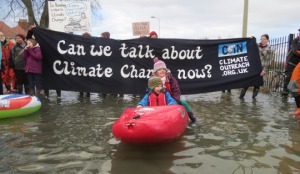
As Atlantic gales batter the south of England, and historic rains swamp other parts of it, a scan of mainstream British print media reveals that less than 1 in 10 of the stories about the floods venture to suggest any possible link to climate change.

Can we talk about climate change(Photo: Climate Outreach)

At the same time, polls indicate that two thirds of people in the UK have never talked about climate change outside their immediate social circle, and a third of people have never talked about it with anyone at all.

I strongly suspect that the British are not unusual in their deathly silence on this most vital of all subjects.  But:

This short February 13 commentary looks at one local attempt to break the silence, and make the link.

More on scientists and climate change/global warming in Pesky Facts: unspun science for dangerous times, coming from Between the Lines, autumn 2014.


1 Comment

The future of science in Canada: your input is requested

The federal government is asking Canadians to share our thoughts on how to shape the future of science policy in this country. Death of Evidence

Photo: pencanada.ca

Frankly, given the current regime’s dismal record on public science, I doubt they want to know what we think unless it agrees with their corporate agenda, but why not at least give it a try?  After all, it’s still a free country.  In which, by the way, silence is taken for consent.

The stakes are enormous, really a matter of life and death.  Think of the tar-sands, climate chaos, fracking, GMOs….

Evidence for Democracy offers thoughtful recommendations on how to restore public-interest science and evidence-based policy development in Canada.  They request our input:

This is a chance to add your voice to the new science and technology strategy.

The existing strategy only focuses on science and innovation related to business. It completely ignores all the other science that is necessary for the long-term well-being and prosperity of Canadians.  Federal government science capacity is crucial for the support of evidence-informed public policy.

The current strategy is also entirely silent about federal support for basic research.  Amazingly, supporting basic research is not identified as a priority for Canadian science.  Yet such research lies at the heart of all innovation.  No basic research, no innovation: it’s that simple.

We’ve written a draft response, and created a tool on our website for you to submit a response in seconds.

Comments must be submitted by February 7th!  Please add your voice today, and pass this message on.