“The stakes couldn’t have been higher. With so many websites based in the US, the future of the entire Internet hung in the balance.”
A year ago, the open internet looked doomed. The huge bully corporations that monopolize cable and wireless provision announce plans for a two-speed internet: fast for those who could pay, slow – very slow – for the rest of us.
The Federal Communications Commission, responsible for overseeing such things, is not noted for favouring public over corporate interests. Its current chair, Tom Wheeler, is a venture capitalist and former head lobbyist for both the cable and wireless industries, which worked hard behind closed doors and spent lavishly to ensure their stranglehold on the internet.
Erupting in May 2014, a small resistance grew quickly into a multi-faceted, finely coordinated international public campaign, eventually engaging more than 5 million people in protecting our internet. It worked.
On February 26 the FCC commissioners voted 3 – 2 (close, but good enough) to keep the internet open. The details are here (same story, two variations):
Outraged, the bully corps leapt immediately to sue the government, and right-wingers in the US Congress obediently set about sabotaging the historic ruling. Of course.
But still, for now, we can celebrate. This is a rare victory for open communication, equity and freedom of speech.
In Canada, OpenMedia.ca led the campaign, one of many on their docket. This small but formidable grassroots organization is independent, creative and vital.
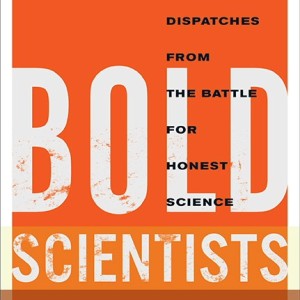
For more on what’s at stake, check out Bold Scientists, chapter 6, The Cloud.
Tuesday, February 24, 1 – 3 pm. Michael Riordon at the Toronto Reference Library, 789 Yonge Street, north of Bloor. Elizabeth Beeton Auditorium, ground floor, right-hand side of the building, back corner. More detail here. Map here.
Wednesday, February 25, 7 – 10 pm. Michael Riordon at Beit Zatoun, 612 Markham Street, one minute west of the Bathurst subway stop on the Bloor line (Markham Street exit). More detail here. Map here.
* February 22 – 28, 2015: Celebrate and defend Freedom to Read (and think, and speak, and share ideas….)
Great minds don’t think alike. They think differently. Bring yours.
Energy Minister Fergus Ewing announced that the moratorium would stand until “a full public consultation on unconventional oil and gas extraction” had been initiated and completed.
A week later, more good news: the Welsh government also voted to block fracking until it is proven safe for the environment and public health. Note: It cannot be proved safe, since it is everything but.
Neither of these initiatives is an outright ban, but in New York state, years of citizen campaigning led to a similar moratorium, and finally last month to a ban.
For a close look at the dirty business of fracking, see Bold Scientists. Scroll down to chapter 10, The unsolved problem.
In Independent Science News, January 12, Jonathan Latham sets out a stark bottom line for the survival of multi-cellular organisms – eg human beings – on this planet.
Latham: “The project to fully industrialise global food production is far from complete, yet already it is responsible for most deforestation, most marine pollution, most coral reef destruction, much of greenhouse gas emissions, most habitat loss, most of the degradation of streams and rivers, most food insecurity, most immigration, most water depletion, massive human health problems, and so on. Therefore, it is not an exaggeration to say that if the industrialisation of food is not reversed our planet will be made unlivable for multi-cellular organisms.”
So then, a matter of life and death. Jonathan Latham offers a recipe for survival. It’s worth a try.
For a taste of how to feed the world on a human scale, visit with Ann Clark, plant physiologist and farmer, in Bold Scientists, chapter 2, Digging thistles. Read an excerpt here.


 Tuesday, February 24, 1 – 3 pm. Michael Riordon at the Toronto Reference Library, 789 Yonge Street, north of Bloor. Elizabeth Beeton Auditorium, ground floor, right-hand side of the building, back corner.

 Michael Riordon