“A recent New York Times editorial, referencing the rapid development of the Alberta oil sands, went so far as to describe new communications restrictions on government scientists as ‘an attempt to guarantee public ignorance.’” – from an open letter to the current Canadian government, signed by more than 800 scientists from 32 countries.
Image: Steve Nease, The Toronto Star
The international roster of scientists called on the Harper government to end “burdensome restrictions on scientific communication and collaboration faced by Canadian government scientists.” More detail on the story here.
The call was made in an open letter drafted by the Cambridge, Mass.-based Union of Concerned Scientists. UCS represents U.S. scientists, and fosters “rigorous science to build a healthier planet and a safer world.”
The need for this unusual intervention is strongly reinforced in a new report from the Canadian organization Evidence for Democracy. It assesses the communication and media policies of 16 Canadian federal government departments.
For more on the fight for open science and democracy, see chapters 9 and 12 in Bold Scientists. Read an excerpt here.
Scientists Biased, Talk Too Much: Confidential government memo.
Details here, in Blacklock’s Reporter: minding Ottawa’s business, August 11, 2014.
Tar sands, Alberta, Canada. Photo: The Nation.
The primary target of the confidential memo, John Smol, is a professor at Queen’s University in Kingston, Ontario, a widely acclaimed paleolimnologist (fathoming the life stories of lakes), and Canada Research Chair in Environmental Change.
Why does the Harper government want to silence John Smol and his co-researchers? Because they know too much. The current regime in Ottawa is an aggressive booster of the enormously destructive tar sands colossus, and is determined to keep Canadians strictly on message: tar sands = good for Canada, with minimal harm. Period. Trouble is, their message keeps getting shredded by the findings of honest science.
Why won’t John Smol shut up? He knows too much:
“The huge problem is that many environmental problems are long scale. They can take years, decades to show up – or longer, sometimes I work in centuries, even millennia. But politicians think in terms of four years, at best. Look at the tar sands – go ahead, pump it out as fast as you can, we’ll be out of here in four years, what do we care? Industry is even worse, they think in quarters, 90-day intervals. Costs for the future are horrendous, but they’re not in this fiscal cycle. When things go extinct, they’re extinct forever. You destroy a river system, it’s gone. Destroy a fish population, it’s gone. How do you gauge what that’s worth?”
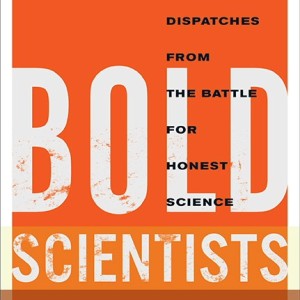
Delve into John Smol’s research, paleolimnology, and why he speaks out, in Bold Scientists: dispatches from the battle for honest science. Available September 4, 2014, in print and e-book from Between the Lines.
“The natural gas boom has led to cleaner power and greater energy independence. That’s why my administration will keep cutting red tape and speeding up new oil and gas permits.”
– President Barack Obama, February 12, 2013.
Not so fast.
Fracking waste-water. Photo: SFAA News.
July 10, 2014, Concerned Health Professionals of New York released a report that sets the record straight on the hazards of fracking. Sandra Steingraber, PhD, co-founder of (CHPNY), explained to the press, “This compilation of findings brings together data from many fields of study, and reveals the diversity of the problems with fracking—from increased flood risks to increased crime risks, from earthquakes to methane leaks. What this multitude of threats all have in common is the ability to harm public health.” (From an EcoWatch report.)
In New York state, fracking – shattering the earth’s crust with a toxic mix of water and chemicals to extract gas and oil – has been held at bay so far by vigourous citizen opposition. But as the industry spreads rapidly across North America and around the globe, it generates huge profits for corporations, and a tidal wave of misinformation from their enablers in government and the media.
Every place where fracking invades, public opposition springs up, but until recently it’s been hampered by lack of access to scientific data on the hazards. Now professional organizations like Concerned Health Professionals of New York (CHPNY) and Physicians, Scientists and Engineers for Healthy Energy (PSE) are breaking through industry/government secrecy to liberate the necessary data.
An invaluable resource, the ground-breaking (in the best sense) new report from CHPNY can be read and downloaded here.
Dig deepinto the science vs fracking story inBold Scientists: dispatches from the battle for honest science, comingSeptember 2014 from Between the Lines.
Where I live in eastern Ontario, Canada, an unusually cool, wet spring has generated sumptuous gardens, planting problems for farmers, hordes of hungry mosquitoes, and complaints from people bound for the beach.
But in the big picture, on the only planet we have, yesterday the US National Oceanic and Atmospheric Administration released its latest global climate report:
May 2014 was the warmest May on record.
Four of the five warmest Mays on record have occurred in the past five years.
May 2014 marked the 351st consecutive month with a global temperature above the 20th-century average.
When will we ever learn?
Scientists wrestle with urgent conundrums in Bold Scientists: dispatches from the battle for honest science, due September 20, 2014 from Between the Lines.

 Author Michael Riordon in dialogue: Whole food for free range minds.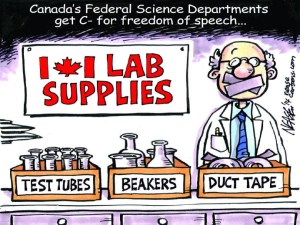


 Michael Riordon