Tuesday, February 24, 1 – 3 pm. Michael Riordon at the Toronto Reference Library, 789 Yonge Street, north of Bloor. Elizabeth Beeton Auditorium, ground floor, right-hand side of the building, back corner. More detail here. Map here.
Wednesday, February 25, 7 – 10 pm. Michael Riordon at Beit Zatoun, 612 Markham Street, one minute west of the Bathurst subway stop on the Bloor line (Markham Street exit). More detail here. Map here.
* February 22 – 28, 2015: Celebrate and defend Freedom to Read (and think, and speak, and share ideas….)
Great minds don’t think alike. They think differently. Bring yours.
Energy Minister Fergus Ewing announced that the moratorium would stand until “a full public consultation on unconventional oil and gas extraction” had been initiated and completed.
A week later, more good news: the Welsh government also voted to block fracking until it is proven safe for the environment and public health. Note: It cannot be proved safe, since it is everything but.
Neither of these initiatives is an outright ban, but in New York state, years of citizen campaigning led to a similar moratorium, and finally last month to a ban.
For a close look at the dirty business of fracking, see Bold Scientists. Scroll down to chapter 10, The unsolved problem.
According to OpenMedia.ca, “The data they’re collecting can identify everything from your sexual orientation, religious and political beliefs, to your medical history. This sensitive information is being shared with the spy agencies of several other countries, without our knowledge or consent.”
If you oppose secretive, ever-expanding, high-cost, out-of-control spying on all of us, say so now.
This week, the Harper regime introduced dangerous new anti-terrorism legislation that will give spy agencies even more powers.
Michael Vonn, Policy Director, BC Civil Liberties Association: “Canada has utterly failed to respond to the urgent need for national security oversight and instead, proposes an unprecedented expansion of powers that will harm innocent Canadians and not increase our public safety.”
In Independent Science News, January 12, Jonathan Latham sets out a stark bottom line for the survival of multi-cellular organisms – eg human beings – on this planet.
Latham: “The project to fully industrialise global food production is far from complete, yet already it is responsible for most deforestation, most marine pollution, most coral reef destruction, much of greenhouse gas emissions, most habitat loss, most of the degradation of streams and rivers, most food insecurity, most immigration, most water depletion, massive human health problems, and so on. Therefore, it is not an exaggeration to say that if the industrialisation of food is not reversed our planet will be made unlivable for multi-cellular organisms.”
So then, a matter of life and death. Jonathan Latham offers a recipe for survival. It’s worth a try.
For a taste of how to feed the world on a human scale, visit with Ann Clark, plant physiologist and farmer, in Bold Scientists, chapter 2, Digging thistles. Read an excerpt here.

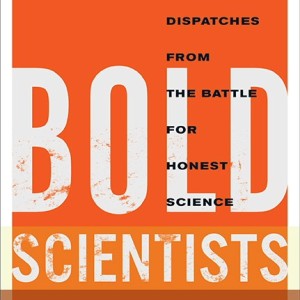 Tuesday, February 24, 1 – 3 pm. Michael Riordon at the Toronto Reference Library, 789 Yonge Street, north of Bloor. Elizabeth Beeton Auditorium, ground floor, right-hand side of the building, back corner. More detail here. Map here.


 Michael Riordon