Everywhere on this earth we have plundered, blasted, torn, drilled, stripped and otherwise devastated “beautiful, quiet, complicated” landscapes that sustained us for millennia. Add destruction of the other two life support systems, water and air, and we dig our own graves.
North Dakota oil drill pads. Photo: National Parks Conservation Association
One such fragile landscape is the badlands region of North Dakota. Unfortunately it’s also the centre of the decade-long Bakken shale oil boom. In The cradle of conservation, a touching – literally, touching – account in Earth Island Journal, conservation writer Taylor Brorby revisits the state where he grew up, and wonders what might still be recovered here after the boom has died.
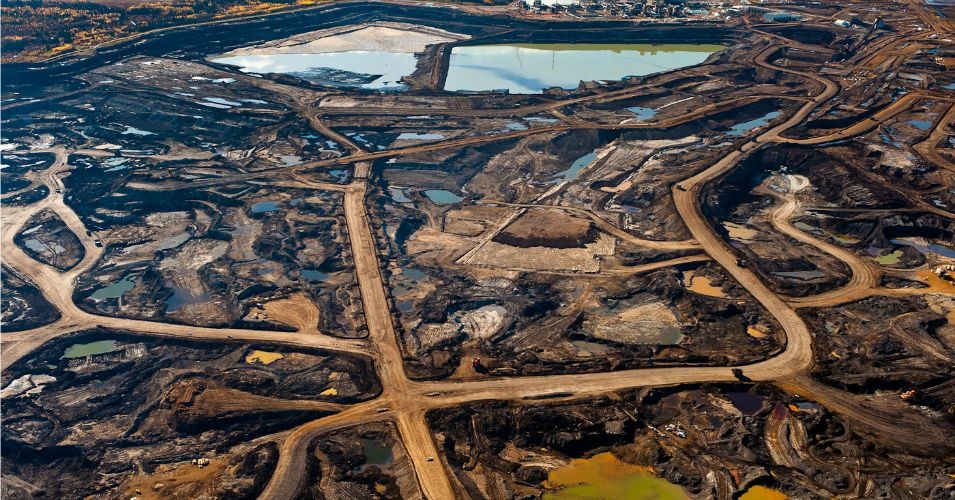
As in the northern Alberta tar sands, enormous profits have been extracted here, and incalculable harm done. Now oil prices have plummeted, but still, with lavish government subsidies the plunder goes on. So does resistance on the ground. One way or another, eventually the plunder – or the oil – must come to an end. And as in any disaster, those who remain will recover what they can.
For further insight into the nature, value and recovery of living landscapes, check out Bold Scientists, here. Scroll down to chapter 3, A dialogue with the world.
In the previous post I mentioned the extreme dangers that secretly-negotiated, corporate-dictated international trade deals pose to our fragile planet, and our efforts to defend it.
A nightmarish example of such a deal is the prettily named Trans-Pacific Partnership (TPP), recently signed by – among other perpetrators – a representative of the former Northern Republican (aka Conservative) regime in Canada, just before they got the electoral boot.
Please note: The TPP is not a done deal for Canada until the newly constituted Parliament ratifies it. As of now, the Liberal majority looks alarmingly prepared to do so, but with enough public pressure, who knows what might happen…
Due to lack of time and space, I didn’t provide details on the actual dangers of the TPP to the earth and its inhabitants.
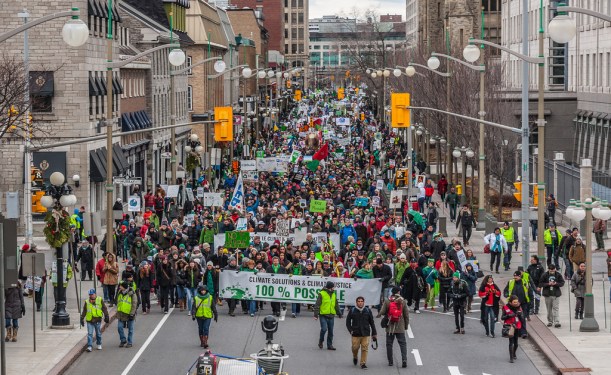
On a grey, chilly day, 25,000 of us (give or take a few) took to the streets of the national capitol. Beautifully diverse in race, origin, faith, age, gender, orientation, and politics, we sent one message to those in power: Climate solutions and climate justice = 100% Possible. 100% renewables by 2050 = 100% possible. Act now or get out of the way.
If you ask me, 2050 is too far away. So easy for slippery politicians to say, “2050? Why not, whatever…” But that’s just me, quibbling.
I suspect there are few illusions among this crowd as to what we face: a towering, apparently seamless wall of greed, governments bought and sold, rampant corruption, fear and inertia. By hook or by crook, the arrogant few inside the castle control the levers of power and will do whatever it takes to hold onto them.
One example: In France the government used the recent attacks in Paris as an excuse to ban all public demonstrations at COP21, the glamourous big stage where ‘world leaders’ aired their platitudes this week, while groveling to their corporate sponsors. Citizens who defied the ban – public protest being one of the few levers we still have – were tear-gassed by police then truckloads of them were arrested. The authorities also house-arrested climate justice activists, and then a lawyer who tried to appeal the protest ban in court.
This tyranny was imposed, and will continue to be imposed, in the name of anti-terrorism. This is the “democracy” that the authorities claim to defend.
But: With the earth’s life support systems under sustained corporate assault and engineered wars, fully backed by virtually every government on the planet, as humanity and our neighbours sink into ever deepening harm and peril, it only takes open eyes to see who are the real terrorists.
Here in comfy Canada, our shiny, smiling new government is doing some good things, beginning to undo at least some of the wreckage perpetrated by the outgoing Northern Republicans (aka Conservatives). At the same time, the newly elected Liberal government openly supports the atmosphere-killing tar sands, the pipelines and trains needed to deliver their toxic brew to ports and ships on both east and west coasts, as well as the Trans-Pacific Partnership, a catastrophic corporate-dictated trade agreement, negotiated in secret, that will make it virtually impossible for any signatory government to take effective action against climate collapse.
But despite all this, people everywhere will continue to find creative ways to express their love for the earth and for justice, and their refusal to comply with those who would trample both.
In Ottawa, November 29, 2015, the people’s march for climate justice culminated with the creation of a giant message to Parliament. (Look for me about halfway up the right side of the second zero…)
In our thousands, we spelled it out for them: 100% possible.
The leap manifesto offers real grounds for real hope. Not the fast-food Hope marketed by cynical politicians, but the real thing, deeply transformative, built by all of us with open eyes, compassion, imagination, and yes, hard work.
Stephen Harper’s toxic legacy. (Photo: via PriceofOil.org)
The tar sands corporations and the Harper regime are hard to tell apart. Both believe that plunder is their right, even their duty. Both are obsessed with greed and power, their religion. Both do harm on an almost numbing scale, and call it “good management.” Both depend on each other in myriad ways for their survival. Both hate democracy.
In addition to the tar sands nightmare, the Harper regime has presided over a full spectrum of unnatural disasters, including: systematic assaults on environmental protections and honest science, starvation of the national health care system, massive surveillance, escalating military budgets and eager participation in criminal wars wherever US authorities choose to attack.
In a sane society, all of these would be considered major crimes. In Canada, the current regime hopes they will be grounds for their re-election.
I have no illusions about elections as a solution to the enormous problems we face. I know that once in power, none of the parties on offer will go nearly as far as I think they should to address these vital issues honestly, fairly, and adequately. But:
By now we know from bitter experience that if the Harper regime can fool enough Canadians into voting for it in October, the disasters will only deepen and multiply.

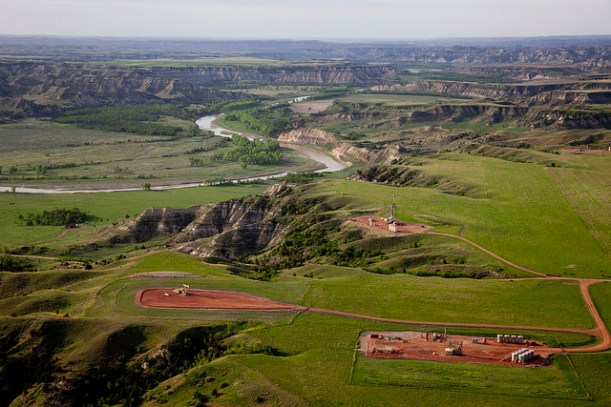 North Dakota oil drill pads. Photo: National Parks Conservation Association


 Michael Riordon