Michael Riordon

the view from where I live


Leave a comment

Bees and honest scientists: under attack

Honey bee, WesternHoney bee, Western.  Photo: commons.wikimedia.org

Bees keep us alive.  They and other insects pollinate two-thirds of all food crops.  No pollination, no food crops.

Bees and other pollinators are in great peril, their populations in sharp decline worldwide. A growing body of evidence identifies neonicotinoids, chemical pesticides that impair the neurological systems of insects, as a key factor in the decline.

Some of these chemicals are already banned or restricted in several European countries.  Yet neonicotinoids remain the most widely used pesticides on earth, generating enormous profits.

Scientists gather and interpret data to make the necessary links between neonicotinoids and bee collapse.  But in Canada and the USA scientists whose findings conflict with the corporate agenda are under escalating attack.  Currently in the US:

“Your words are changed, your papers are censored or edited, or you are not allowed to submit them at all.” – a senior scientist at the US Department of Agriculture Research Service.

“Censorship and harassment poison good science and good policy.” – Lori Ann Burd, environmental health director at the Center for Biological Diversity.

Details here.

Follow the Honey, a report from Friends of the Earth, exposes how agrochemical corporations obscure links between their chemicals and pollinator decline, and block government regulation.  Read it here.

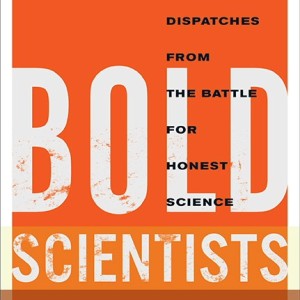
For more on the battle for honest science, have a look inside Bold Scientists.


Leave a comment

Frack off!

With remarkable foresight, in March an NDP member of the Ontario legislature, Peter Tabuns, introduced a bill (proposed law) to ban fracking in Ontario.  (Fracking = hydraulic fracturing of the earth’s crust for gas and oil.)

With remarkable stupidity, the ruling Liberal government immediately denied any need for such a bill. There is no fracking yet in Ontario, said Natural Resources Minister Bill Mauro, so there is no need for a ban.  More detail here.

Fracking cartoonWithout a ban, the door stays wide open. Wherever the door is open, oil and gas corporations walk right in and start drilling. And wherever frackers drill, disaster follows.   Ask people on what’s left of the ground in Ohio, Pennsylvania, Texas, the Dakotas, south England…

Fracking consumes and poisons millions of litres of fresh water – for every well. The drillers inject a toxic brew of chemicals under high pressure to smash underground shale and force oil and gas to the surface. Fracking operations leak vast quantities of methane, a devastating greenhouse gas. They also set off earthquake epidemics where such incidents have been rare.  And then there are the pipelines to transport the gas/oil to refineries and ports, and with pipelines, spills and explosions.

Result: Immense profit for a few, incalculable harm for the rest of us and the earth.

Worldwide, as soon as people become informed about fracking, resistance grows rapidly, and people have won government bans and moratoria in many municipalities, provinces, states and countries. Check here for an up-to-date list.

Meanwhile in Ontario, the door – our door, by the way – remains wide open.

In a 2014 poll, 75% of Ontarians supported a moratorium on fracking.  As Peter Tabuns understands, the time to close the door is now, before it’s too late.

The bill to ban fracking is scheduled to come to a vote on May 7, a week from now.  Send a message to Premier Wynne, via a new email campaign from the Council of Canadians: Ban fracking in Ontario. Close the door now.

The underground story on fracking and the growing resistance is here, inside Bold Scientists.  Scroll down to chapter 10, The unsolved problem.


2 Comments

Life & death in Monsantoland

monsantoland

Two recent events in Monsanto-land tell it all:

Lobbyist claims Monsanto pesticide safe to drink, bolts when offered a glass. (It’s caught on a gem of a video, embedded in the story). Raw Story, 27 March 2015.

Monsanto demands World Health Organization retract report on Roundup link to cancer.  EcoWatch, 26 March 2015.

For a good dose of sanity on GMOs, hunger, and post-oil farming, check out Ann Clark, plant physiologist and farmer, in Bold ScientistsRead an excerpt here.

Meantime, pass this on.  And have a nice day.


Leave a comment

A victory in El Salvador: Farmers defy Monsanto

El Salvador seedlings

The Monsanto and Dow corporations, both chemical behemoths, nearly always get their way, by a variety of means and with disastrous consequences on almost every continent. But in El Salvador, the smallest and most densely populated country in Central America:

“The farmers, who have already been consistently outperforming Monsanto with their local seed, which is far healthier and more productive, have just managed to bring about a giant defeat of Monsanto by preventing it   from supplying El Salvador with its seeds.”

The full story is here.

A rare victory, and an inspiring model for farmers everywhere.


Leave a comment

Whole food for free-range minds in Winnipeg: a reminder

Wednesday, March 25

1:30 pm.  Bold Scientists, a talk at the University of Winnipeg.  Room 5L25, Department of Geography, Lockhart Hall.  Map.

7:30 pm.  Bold Scientists, a talk at the McNally-Robinson bookstore, Grant Park, 1120 Grant Avenue.  In the Travel alcove.  Map.

Pass it on.

 cropped-bold-scientists-front-cover8.jpg