Michael Riordon

the view from where I live


1 Comment

Not in my backyard

DSCF4867Marla, in our extended backyard.

On a cool, bright autumn walk with Marla, I got to thinking about NIMBY.  Not In My Backyard.  It implies a perceived threat to the space that represents ‘my backyard.’  But what defines a backyard?  Fences?  Where I live we have none, except for ancient, collapsing cedar rails that now seem archeological.

We range freely through miles of forest, open meadow and wetland, far beyond the legal extent of the title deed that defines the 60 rural acres my partner and I ‘own.’ The land beyond is semi-wild, with no roads, no power lines, the occasional ATV incursion, and an abundance of animal tracks. I assume that someone ‘owns’ this other land; that’s how things have worked since the Europeans arrived. But for now, this is our extended backyard.

So then, what constitutes a backyard? If you’re an imperial power it means anything you want, up to and including the whole earth and as far out into space as you can grab. But what does it mean for the rest of us?

On my travels in writing Bold Scientists I visited with conservation biologist Curt Meine in the midwestern state of Wisconsin. Near Madison, the capital, we explored a devastated landscape, the former site of a vast military munitions complex, which citizens are working hard to restore to a healthy Sauk Prairie landscape. They hope to take care of it, as part of their extended backyard. But where are the boundaries?

As Curt sees it, “In nature the boundaries of larger reality are never set. In my little local place I can walk around, grow a garden, watch the birds, keep an eye on the sand cranes and the wild turkeys. I can only see about a mile, but I know the river out there is connected all the way to the Mississippi River, 80 miles that way (he points southwest, more or less), that feeds eventually into the Atlantic Ocean, which is part of the global ocean system. It’s the same with landscapes, they can be as small as a few square feet where you’re standing, and as large as the planet. Among all the levels are feedback loops, so they all affect each other.

“This means you can’t have a healthy farm or forest, park or city, in a landscape that’s unsustainable, or on a planet where the climate is going haywire, temperatures are rising, oceans are acidifying, and the poles are melting, largely due to our actions. So there’s always this tension between wanting to save the world at large and wanting to focus all your energies close to home. At least if you can work well on your part, and others are working well on their part, eventually you can build a community of engaged people to collaborate on the larger pieces of the whole.”

Imagine if in our backyard, our extended backyard, there were no tar sands. No oil and gas pipelines. No nuclear plants. No tops blown off mountains for coal.  No fracking… Imagine.

Meantime, biologist Curt Meine carries on the long community struggle to restore one small sliver of this precious earth, ultimately the only backyard we’ve got. The story is here, in Bold Scientists.

Join me for a talk on gardening and the extended backyard, October 27, 2015, 6:30 – 8:30 pm, at the Toronto Reference Library.

Event details hereAddress & transit info here.  Scroll down for a Map link.


Leave a comment

How low can we go?

October 19, 2015.  Election day in Canada.

Engineered illusions have fueled the Harper regime’s dangerous grip on power.  Here’s good insight into how some of these illusions are collapsing along with international crude oil prices.

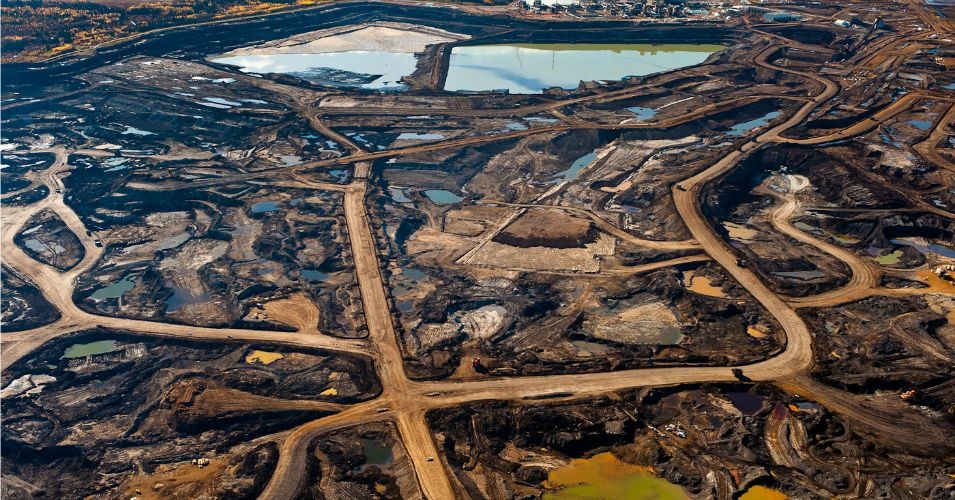
Tar sands blight

Stephen Harper’s toxic legacy. (Photo: via PriceofOil.org)

The tar sands corporations and the Harper regime are hard to tell apart.  Both believe that plunder is their right, even their duty.  Both are obsessed with greed and power, their religion.  Both do harm on an almost numbing scale, and call it “good management.” Both depend on each other in myriad ways for their survival.  Both hate democracy.

In addition to the tar sands nightmare, the Harper regime has presided over a full spectrum of unnatural disasters, including: systematic assaults on environmental protections and honest science, starvation of the national health care system, massive surveillance, escalating military budgets and eager participation in criminal wars wherever US authorities choose to attack.

In a sane society, all of these would be considered major crimes.  In Canada, the current regime hopes they will be grounds for their re-election.

I have no illusions about elections as a solution to the enormous problems we face.  I know that once in power, none of the parties on offer will go nearly as far as I think they should to address these vital issues honestly, fairly, and adequately.  But:

By now we know from bitter experience that if the Harper regime can fool enough Canadians into voting for it in October, the disasters will only deepen and multiply.

Question is: How low can we go?

October 19, 2015.  A fateful day for Canada.


2 Comments

Good news: Scotland to ban growing of GM crops

Scottish Minister for the Environment, Food and Rural Affairs Richard Lochhead: “Banning growing genetically modified crops will protect and further enhance our clean, green status.”

Member of the Scottish Parliament Alison Johnstone: “GM is not the answer to food security, and would represent further capture of our food by big business.”

Scotland, landscape 2

Details of the ban are here.

Similarly, in 2014 Russia banned the import and cultivation of GM crops.  Prime Minister Dmitry Medvedev: “If Americans like to eat GMO products, let them. We don’t need to do that. We have enough space and opportunities to produce organic food.”

South of the border, the Conservative government of Britain has thrown open the door to GM crops.

In April, the European Commission reversed an earlier ban and approved the import of 10 new GM crops for human and animal consumption, including corn, soybeans, cotton and canola oil.

Meanwhile in the USA, the House of Representatives has just passed the perversely named “Safe and Accurate Food Labeling Act,” which prohibits state and local authorities from requiring safe and accurate GMO labeling. By now it’s clear that when consumers know about GMOs, they tend to be skeptical. But when they don’t know… It’s unlikely the Act will encounter any resistance in the Senate or the White House, both deeply beholden to the agri-chemical leviathans.

There is just one fly in the banning-GMOs ointment, but it’s a big one: Under massive international trade agreements like the Trans-Atlantic Trade and Investment Partnership (TTIP), negotiated in secret by corporate lobbies, corporations can sue any government bold enough to enact sensible, democratic measures meant to protect the public and the earth if there’s a chance they might limit actual or even potential corporate profits. A ban on GM crops is as likely a target as any.

Still, in taking responsible action, governments of countries like Scotland and Russia set an inspiring example of what is possible.

For a sane conversation on genetic manipulation and food security, visit Canadian scientist/farmer Ann Clark in Bold Scientists, here.  Scroll down to chapter 2, Digging for thistles.


1 Comment

First, do no harm

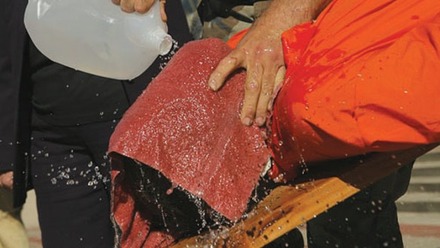
“I have seen what happens when standards of decency, human rights and ethics are thrown out in a wave of totalitarian or government zeal.” Steven Reisner, member of the Council, American Psychological Association, and co-founder of the Coalition for an Ethical Psychology.

Torture, Guantanamo

A shining moment: On Friday, August 7 in Toronto, Canada, the American Psychological Association voted to bar its 80,000 members from any further collaboration in ‘national security interrogations,’ ie torture by the American government and its agencies.

This historic shift was hard won, after a decade of grassroots organizing to counter APA executive deceit and collusion with the CIA.

Details here, in three short videos from Democracy Now!

A report on collusion between the CIA and the former executive of the APA, is here.

For a provocative critique of psychological/psychiatric abuse of power, see Bold ScientistsAn excerpt is here.  Scroll down to chapter 7, ODD.


Leave a comment

Frack off!

With remarkable foresight, in March an NDP member of the Ontario legislature, Peter Tabuns, introduced a bill (proposed law) to ban fracking in Ontario.  (Fracking = hydraulic fracturing of the earth’s crust for gas and oil.)

With remarkable stupidity, the ruling Liberal government immediately denied any need for such a bill. There is no fracking yet in Ontario, said Natural Resources Minister Bill Mauro, so there is no need for a ban.  More detail here.

Fracking cartoonWithout a ban, the door stays wide open. Wherever the door is open, oil and gas corporations walk right in and start drilling. And wherever frackers drill, disaster follows.   Ask people on what’s left of the ground in Ohio, Pennsylvania, Texas, the Dakotas, south England…

Fracking consumes and poisons millions of litres of fresh water – for every well. The drillers inject a toxic brew of chemicals under high pressure to smash underground shale and force oil and gas to the surface. Fracking operations leak vast quantities of methane, a devastating greenhouse gas. They also set off earthquake epidemics where such incidents have been rare.  And then there are the pipelines to transport the gas/oil to refineries and ports, and with pipelines, spills and explosions.

Result: Immense profit for a few, incalculable harm for the rest of us and the earth.

Worldwide, as soon as people become informed about fracking, resistance grows rapidly, and people have won government bans and moratoria in many municipalities, provinces, states and countries. Check here for an up-to-date list.

Meanwhile in Ontario, the door – our door, by the way – remains wide open.

In a 2014 poll, 75% of Ontarians supported a moratorium on fracking.  As Peter Tabuns understands, the time to close the door is now, before it’s too late.

The bill to ban fracking is scheduled to come to a vote on May 7, a week from now.  Send a message to Premier Wynne, via a new email campaign from the Council of Canadians: Ban fracking in Ontario. Close the door now.

The underground story on fracking and the growing resistance is here, inside Bold Scientists.  Scroll down to chapter 10, The unsolved problem.