Michael Riordon

the view from where I live


Leave a comment

How low can we go?

October 19, 2015.  Election day in Canada.

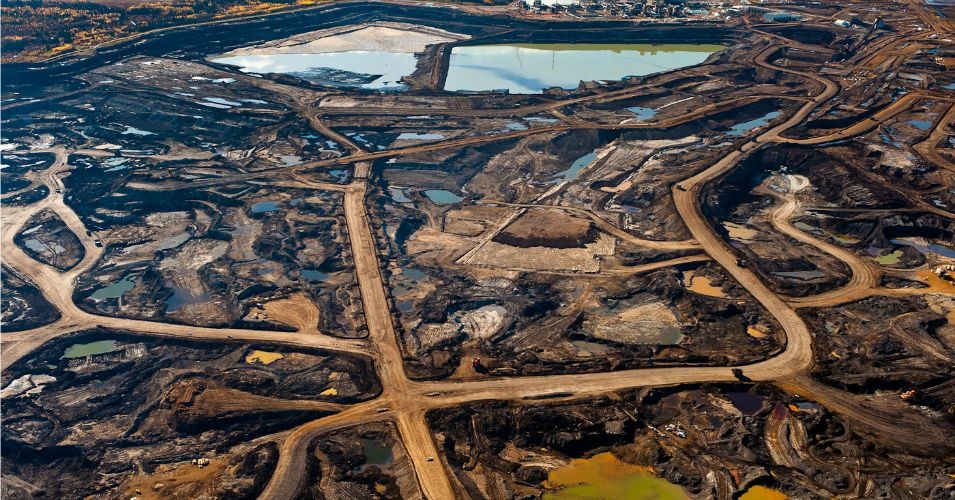
Engineered illusions have fueled the Harper regime’s dangerous grip on power.  Here’s good insight into how some of these illusions are collapsing along with international crude oil prices.
Tar sands blight

Stephen Harper’s toxic legacy. (Photo: via PriceofOil.org)

The tar sands corporations and the Harper regime are hard to tell apart.  Both believe that plunder is their right, even their duty.  Both are obsessed with greed and power, their religion.  Both do harm on an almost numbing scale, and call it “good management.” Both depend on each other in myriad ways for their survival.  Both hate democracy.

In addition to the tar sands nightmare, the Harper regime has presided over a full spectrum of unnatural disasters, including: systematic assaults on environmental protections and honest science, starvation of the national health care system, massive surveillance, escalating military budgets and eager participation in criminal wars wherever US authorities choose to attack.

In a sane society, all of these would be considered major crimes.  In Canada, the current regime hopes they will be grounds for their re-election.

I have no illusions about elections as a solution to the enormous problems we face.  I know that once in power, none of the parties on offer will go nearly as far as I think they should to address these vital issues honestly, fairly, and adequately.  But:

By now we know from bitter experience that if the Harper regime can fool enough Canadians into voting for it in October, the disasters will only deepen and multiply.

Question is: How low can we go?

October 19, 2015.  A fateful day for Canada.


Leave a comment

Frack off!

With remarkable foresight, in March an NDP member of the Ontario legislature, Peter Tabuns, introduced a bill (proposed law) to ban fracking in Ontario.  (Fracking = hydraulic fracturing of the earth’s crust for gas and oil.)

With remarkable stupidity, the ruling Liberal government immediately denied any need for such a bill. There is no fracking yet in Ontario, said Natural Resources Minister Bill Mauro, so there is no need for a ban.  More detail here.

Fracking cartoonWithout a ban, the door stays wide open. Wherever the door is open, oil and gas corporations walk right in and start drilling. And wherever frackers drill, disaster follows.   Ask people on what’s left of the ground in Ohio, Pennsylvania, Texas, the Dakotas, south England…

Fracking consumes and poisons millions of litres of fresh water – for every well. The drillers inject a toxic brew of chemicals under high pressure to smash underground shale and force oil and gas to the surface. Fracking operations leak vast quantities of methane, a devastating greenhouse gas. They also set off earthquake epidemics where such incidents have been rare.  And then there are the pipelines to transport the gas/oil to refineries and ports, and with pipelines, spills and explosions.

Result: Immense profit for a few, incalculable harm for the rest of us and the earth.

Worldwide, as soon as people become informed about fracking, resistance grows rapidly, and people have won government bans and moratoria in many municipalities, provinces, states and countries. Check here for an up-to-date list.

Meanwhile in Ontario, the door – our door, by the way – remains wide open.

In a 2014 poll, 75% of Ontarians supported a moratorium on fracking.  As Peter Tabuns understands, the time to close the door is now, before it’s too late.

The bill to ban fracking is scheduled to come to a vote on May 7, a week from now.  Send a message to Premier Wynne, via a new email campaign from the Council of Canadians: Ban fracking in Ontario. Close the door now.

The underground story on fracking and the growing resistance is here, inside Bold Scientists.  Scroll down to chapter 10, The unsolved problem.


Leave a comment

A victory in El Salvador: Farmers defy Monsanto

El Salvador seedlings

The Monsanto and Dow corporations, both chemical behemoths, nearly always get their way, by a variety of means and with disastrous consequences on almost every continent. But in El Salvador, the smallest and most densely populated country in Central America:

“The farmers, who have already been consistently outperforming Monsanto with their local seed, which is far healthier and more productive, have just managed to bring about a giant defeat of Monsanto by preventing it   from supplying El Salvador with its seeds.”

The full story is here.

A rare victory, and an inspiring model for farmers everywhere.


Leave a comment

Whole food for free-range minds in Winnipeg: a reminder

Wednesday, March 25

1:30 pm.  Bold Scientists, a talk at the University of Winnipeg.  Room 5L25, Department of Geography, Lockhart Hall.  Map.

7:30 pm.  Bold Scientists, a talk at the McNally-Robinson bookstore, Grant Park, 1120 Grant Avenue.  In the Travel alcove.  Map.

Pass it on.

 cropped-bold-scientists-front-cover8.jpg


Leave a comment

Bold Scientists in Winnipeg

Wednesday, March 25

1:30 pm.  Michael Riordon at the University of Winnipeg.  Room 5L25, Department of Geography, Lockhart Hall.  Map.

7:30 pm.  Michael Riordon at the McNally-Robinson bookstore, Grant Park, 1120 Grant Avenue.  In the Travel alcove.  Map.

Unspun science for dangerous times.

BTL BS poster, U of Winnipeg, March 2015